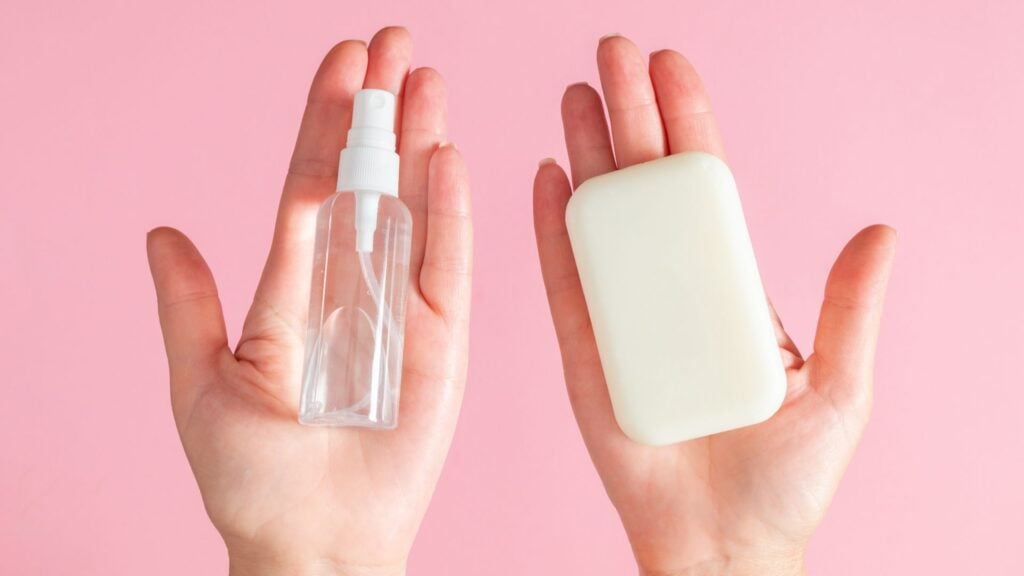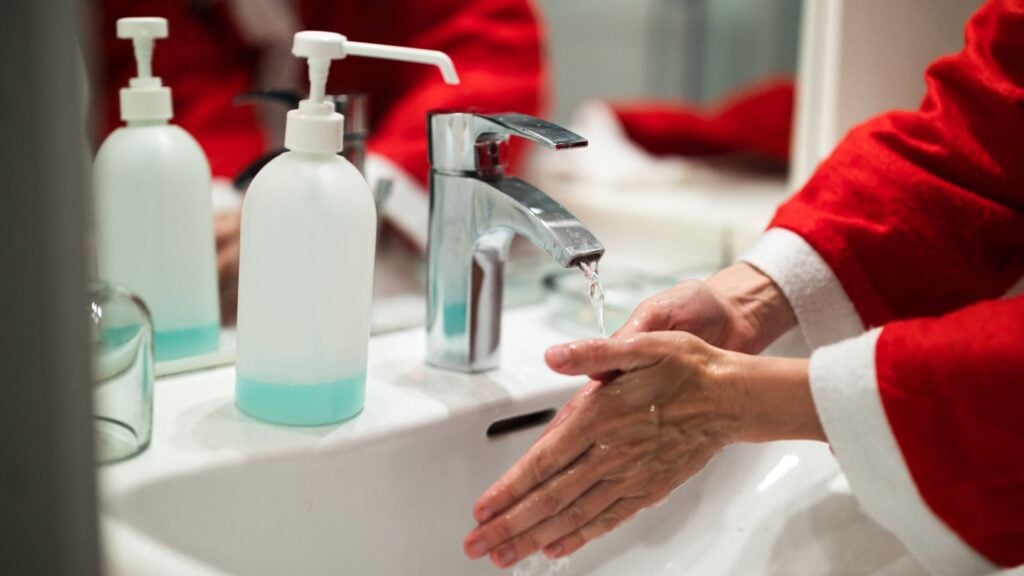


When it comes to soap vs. hand sanitizer, you may have heard that soap and clean running water are superior to hand sanitizer and vice versa for washing your hands and killing germs. But does the same hold true if you’re sick? What if you don’t have access to soap and clean running water? Should you skip the hand sanitizer until you can wash your hands?
As it turns out, soap and hand sanitizer are both effective options for getting hands clean. However, that’s highly dependent on where you are and how dirty your hands are.
When we talk about “soap,” we’re talking about “toilet soap,” which is what most hand soaps are. It’s made of salt from a fatty acid (like vegetable oil) and an alkali (a water-soluble base like lye). Mix these ingredients together, and you’ll create soap molecules. One end of the molecule is hydrophilic (attracted to water) while the other is hydrophobic, which makes it sound like it’s afraid of water but really means it’s attracted to oil.
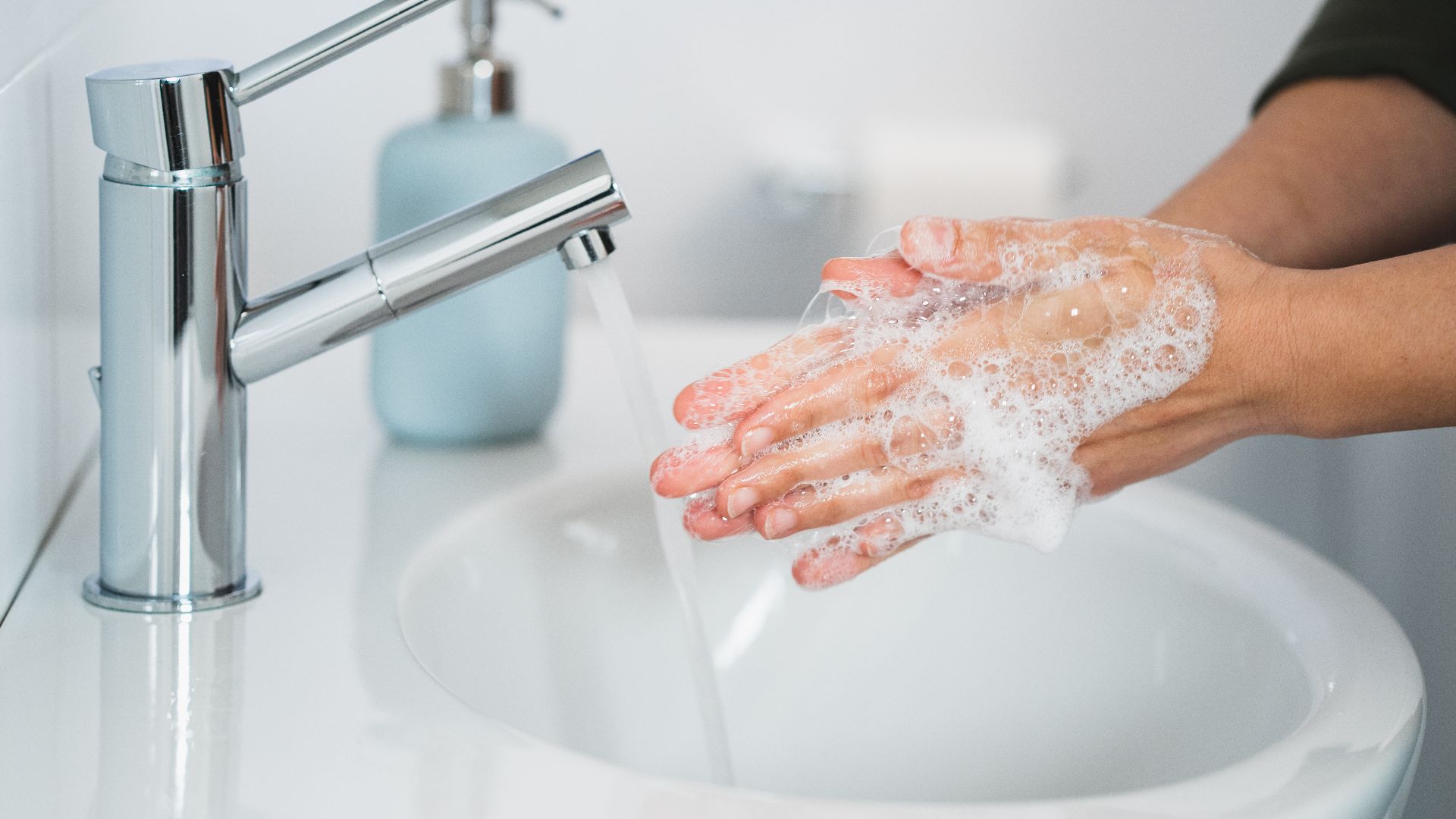
As you apply soap to your hands and lather up, the soap molecules attract water and dirt, lifting them away from your hands, giving the molecules space to form a cluster (micelle) around them. This action stops the dirt from reattaching to your hands while the running water rinses them down the drain.
Contrary to popular belief, washing your hands doesn’t kill germs. As the micelles lift and trap dirt, they do the same to germs, ensuring they wash down the drain.
Hand sanitizer goes by many names: hand antiseptic, hand disinfectant, and hand rub. They come in liquid, gel, or foam versions and attempt to accomplish the same goal: kill germs, like viruses and bacteria. However, only alcohol-based hand sanitizer with at least 60% alcohol will get rid of viruses and bacteria. Why?
Alcohol disrupts the proteins and lipid (fat) molecules that make up the outside of germs. Alcohol, particularly isopropyl alcohol (rubbing alcohol) or ethyl alcohol (ethanol), is the most effective. As the alcohol breaks down the outer surface of the cells, they can no longer hold together, causing the germ to fall apart.
To be clear, this doesn’t mean your hands are “clean.” Applying hand sanitizer with at least 60% to 90% alcohol will destroy germs, but it’s not as effective as soap and water for getting rid of plain old dirt.
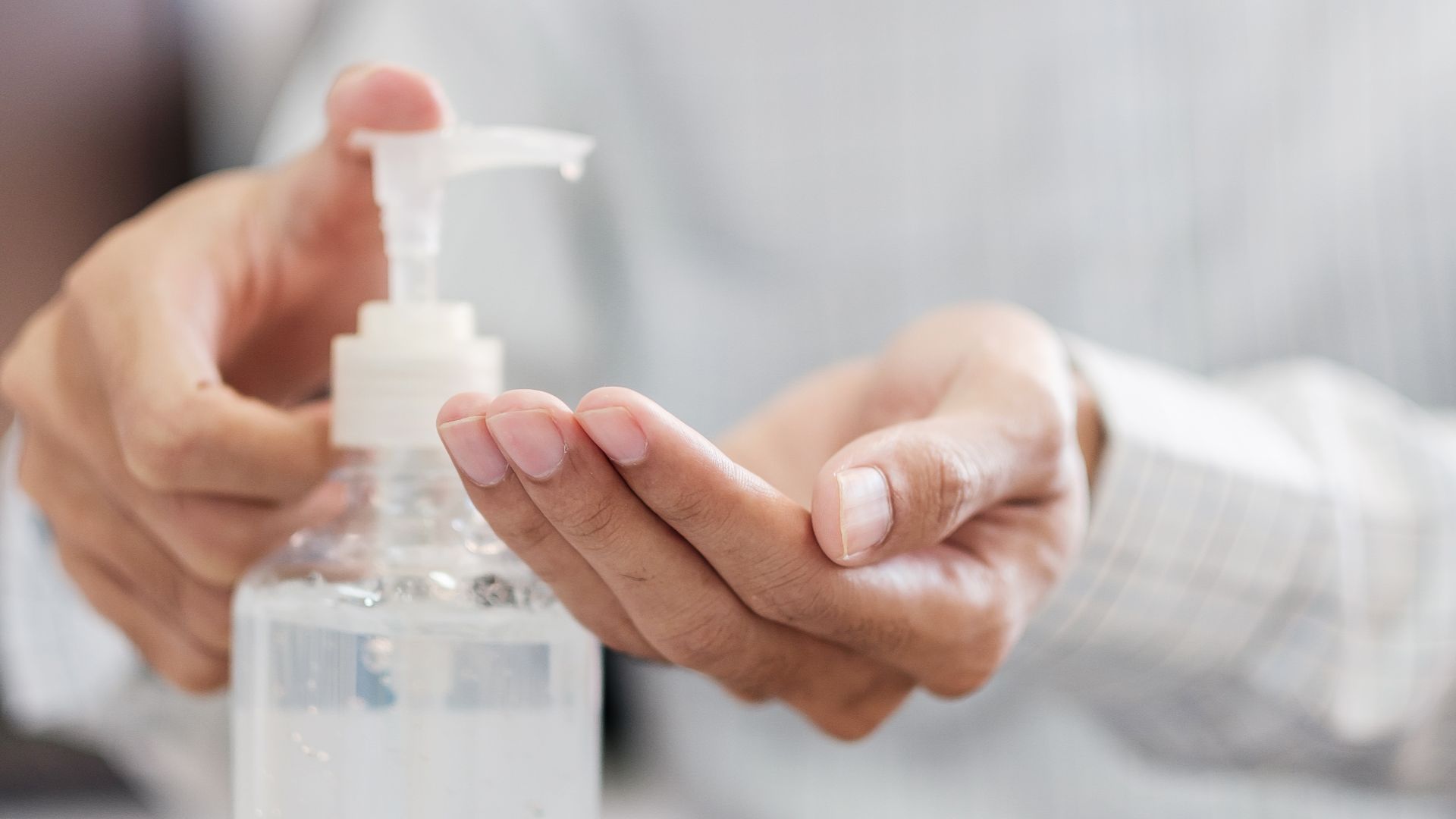
It depends on the meaning of “better.”
One study found no difference between soap and hand sanitizer — even if you use liquid soap. Both perform equally well as a measure of disease control and hand hygiene. However, it’s important to note that this particular study was completed in a clinical setting, which is far different than daily life. For example, most subjects did not have visibly dirty hands, which impacts how both hand sanitizer and soap and water perform.
There are legitimate concerns about using hand sanitizer instead of soap and water for cleaning hands, including:
While hand sanitizer has downsides, so does hand washing with soap and water.
While both hand cleaning methods have drawbacks, they’re also both better than not washing your hands. So, when should you use soap and water, and when should you use hand sanitizer?
Use soap and water when:
Use hand sanitizer when your hands are not visibly dirty but you want to stop the spread of germs. For example, after touching door handles during cold and flu season, hand sanitizer is a fine choice.
Ultimately, the choice between soap and water versus hand sanitizer comes down to your situation. When you’re out and about and you’ve been touching doorknobs and elevator buttons, hand sanitizer makes sense, as long as your hands aren’t visibly dirty. Hand sanitizer may get some of the dirt off, but it can only do so much. When soap and running water are an option, choose that, as long as you wash your hands properly.
While hand sanitizer is portable and good in a pinch, sometimes you need soap and water to clean up a big mess. Ozark River Manufacturing’s portable sinks make that a reality. Our sinks can’t fit in your pocket, but they arrive fully assembled and ready to go right out of the box. Just plug it in, fill the tanks, and you’ll have a fully functional sink in no time.
Our portable sinks go just about anywhere you can and are perfect for
Contact us today and learn more about our portable sink solutions.


Take your time but make sure to save your cart. Drop us your email and we'll take care of the rest!